
The Itinerary
The heart of why we travel—experiencing the world’s wonders and curiosities.
How do you best fill your vacation time with museums, excursions, restaurants, parks, events, markets, tours, and activities you didn’t even know existed?
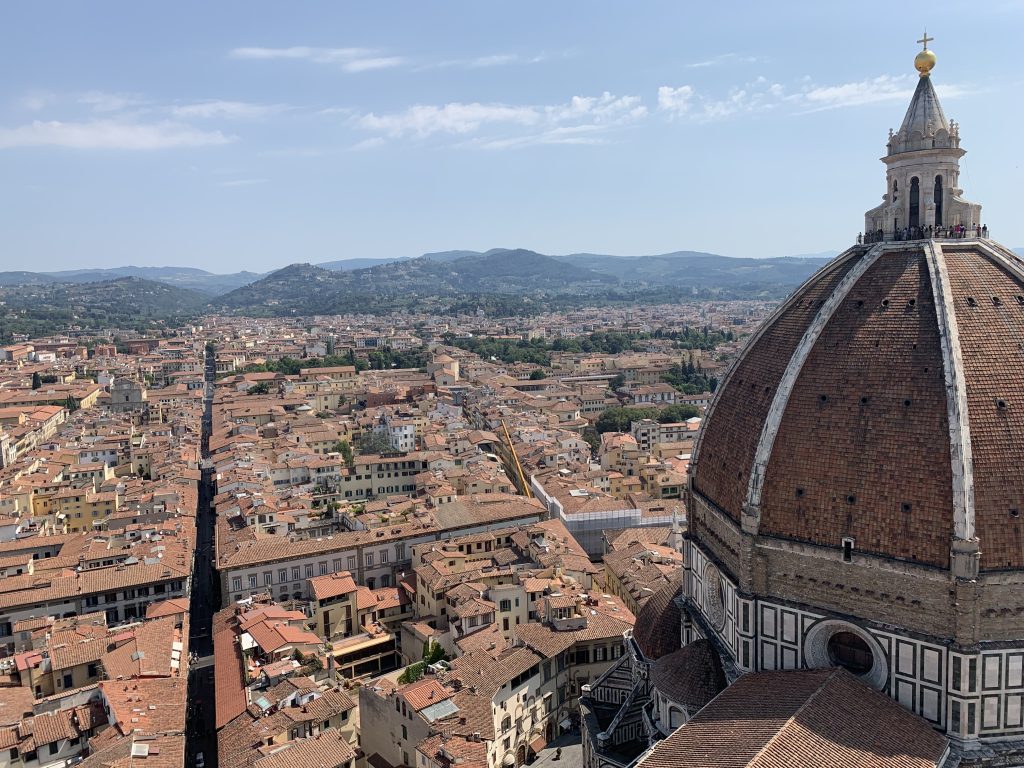
Spreadsheet: Attractions
This next part of Trip Planning is the most time consuming, but it is the bread and butter of any trip—researching activities to do. Create a new tab in your spreadsheet that contains columns for each of your main trip segments (generally different cities, but any time you need new accommodations)
Begin adding the activities you had already mapped out, but in a roughly ranked order. Some helpful columns to add next to the attractions are Hours, Duration, and Price.
- Hours: Some attractions are closed on local holidays, days of worship, on a Monday or Tuesday each week, or have seasonal hours for winter or summer. Trust what the attraction's website says for the days you are visiting and not Google's hours or an AI chatbot.
- Duration: Knowing how long you expect to be at an attraction will be helpful when it comes time to scheduling attractions into your itinerary. If you're not sure, TripAdvisor has an estimate, but make adjustments if you know you're the type of group to spend a whole day at a museum or only 10 minutes at an observation point.
- Price: An attraction or event might be amazing, but if the price is a bit too high for everyone in your group, you can choose to find an alternative or even split up the travel group for a short period. Listing the cost is also helpful for budgeting the trip.
Finally, it can be challenging to get consensus from your travel group if people want to see different things. If necessary, create additional columns with a "score" for each person, either an interest rating from 0 (low) to 9 (high) or a ranking of the attractions after they have been written here. Sharing your spreadsheet with Edit access allows each member of your travel group to feel they have say in planning the trip.
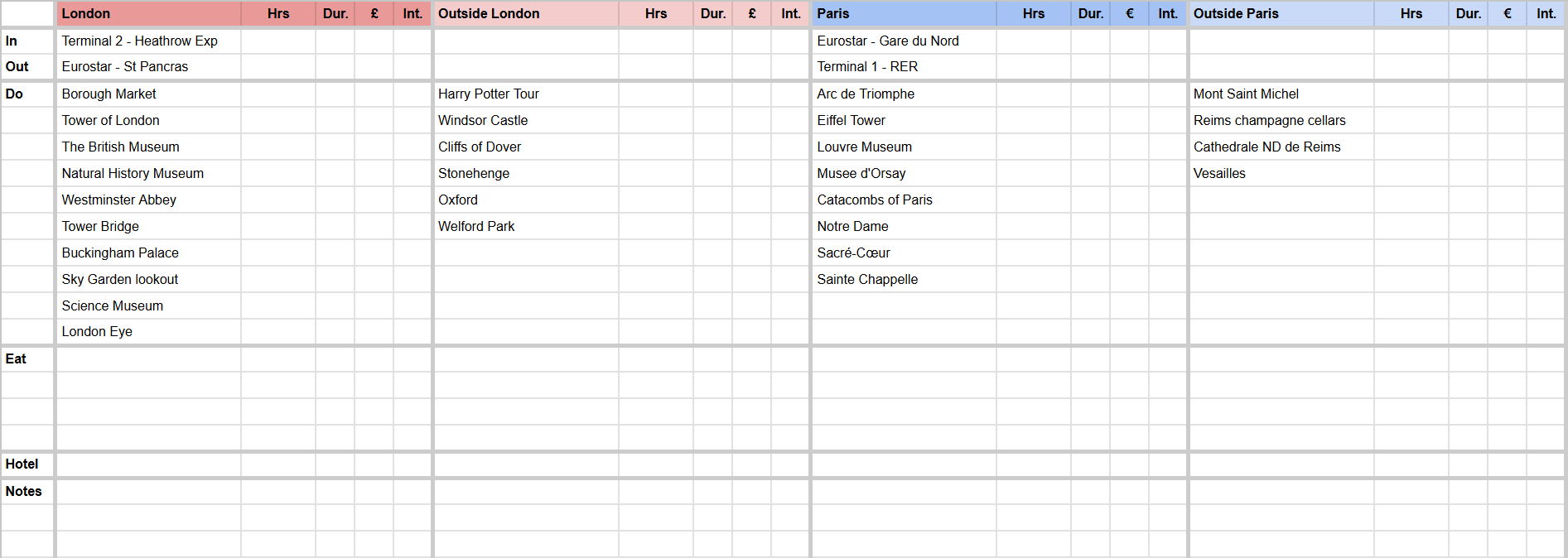
WikiVoyage See / Do
For each of your planned destinations, head back to Wikivoyage to get an idea of the top-level attractions to See and Do. Most likely some of your ideas are already listed, but it’s nice to get some confirmation from other travelers.
Take a look at the “Go next” section as well for some potential day trips.
Travel Books
Although most travel planning has shifted to digital, there is still a decent demand for travel books. It’s handy when traveling to have a quick reference about attractions, addresses, restaurants, or translation help when mobile data may be unavailable.
Head to your local library to find an assortment of great brand options—Lonely Planet, DK, Fodor’s, Rick Steve’s. You may even find different types of books—Top 10s, Self-Guided Walks, Best Hikes, or a Foodie Guide, and specific for a city, region, or country. Borrow several books and if you find some would be valuable to have on your trip, support a book publisher.
Travel books are also a nice break from screens when you have downtime before and during your trip.
TripAdvisor
TripAdvisor is the world’s largest travel planning site with millions of reviewed attractions, businesses, and restaurants. Cities, from major to tiny, have ranked lists for attractions, restaurants, and hotels. It offers a great ordered list of the best things to see or eat. You can also filter the lists for the type of attraction (museums, outdoor, etc.) or type of traveler (couple, adrenaline-seeking, budget-friendly).
TripAdvisor also has extensive lists of tours and experiences that likely won’t show up in guidebooks—things like food tours, cultural sightseeing tours, cooking classes, and all kinds of private tours dedicated to those who want a deeper dive into a destination’s uniqueness.
Each destination also has a Forum for asking questions and providing answers to like-minded travelers. If you can’t find an answer to a question through other research, search the forums or Google “site:tripadvisor.com how to buy online tickets for [attraction]?”
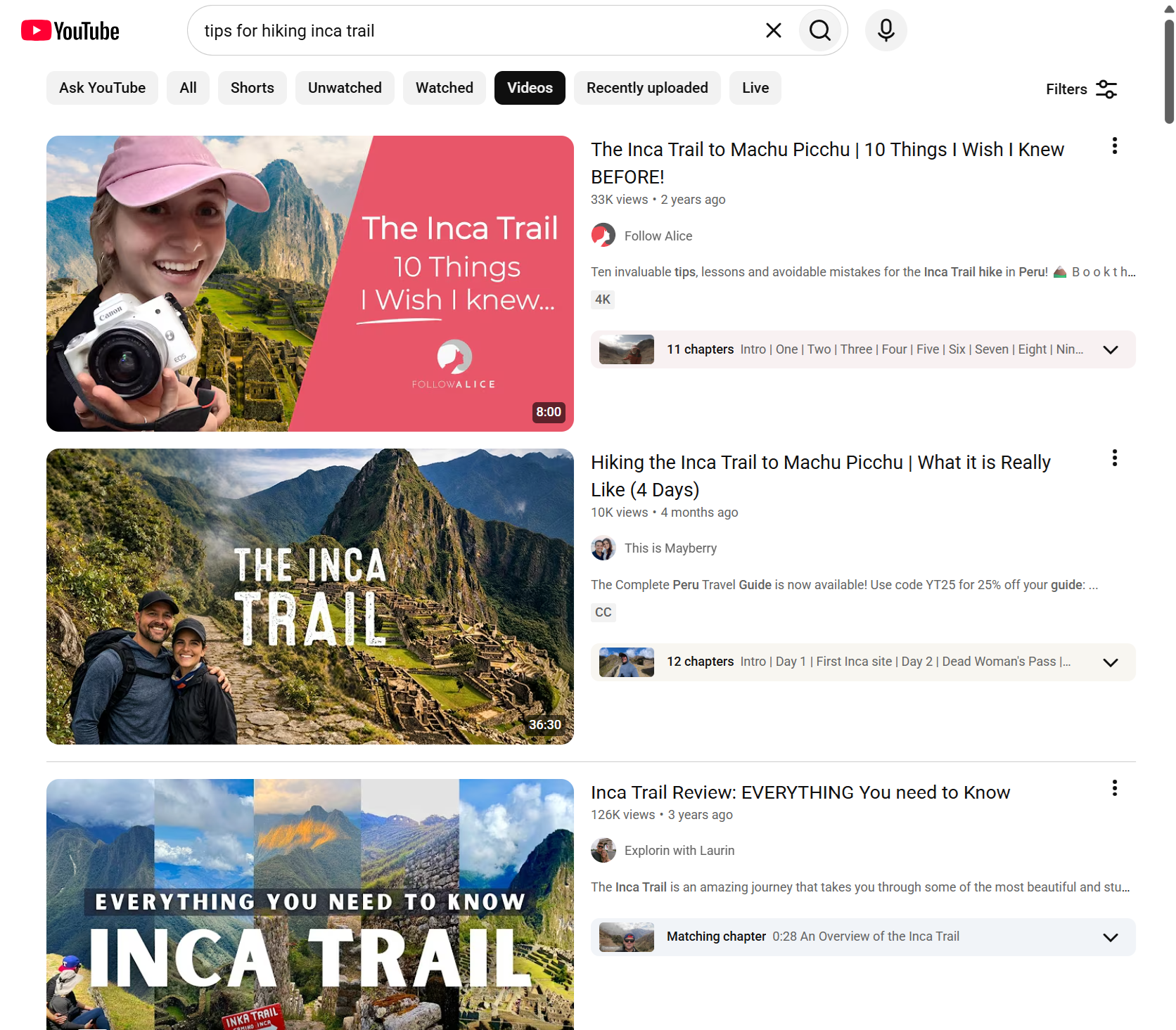
YouTube
Search for YouTube videos about places on your trip and you’ll discover numerous travel-related videos made by travel vloggers, influencers, professionals, or sometimes from official tourism boards. You can even find content specific to your travel needs – “vegan options in Tokyo”, “day trips from Paris”, or “tips for hiking the Inca Trail”.
Social Media / Blogs / Vlogs
A search for specific content could also turn up blogs related to “best bookshops in Florence”.
Popular social media sites like Instagram, TikTok, or Pinterest can present a smorgasbord of images, clips, and ideas for your travels. Look up the attraction on a second source because a single image or video can be misleading or AI-generated.
For other ideas that might not pop up in travel books, Atlas Obscura features off-the-beaten-path places.

Reddit.com/r/[destination]
Reddit will often appear in search results from a city or country’s subreddit, like “What are the best gelato places in Rome?” in reddit.com/r/rome. The responses are usually from local residents and the general consensus places get upvoted to the top.
Spend some time on the subreddit itself and see what locals are talking about. They may have a convenient wiki for FAQs and tips about a destination like reddit.com/r/rome/wiki/index/ or there may even be a link to a similar subreddit aimed at travelers, like reddit.com/user/RomeVacationTips/
Check: Cruises in Port
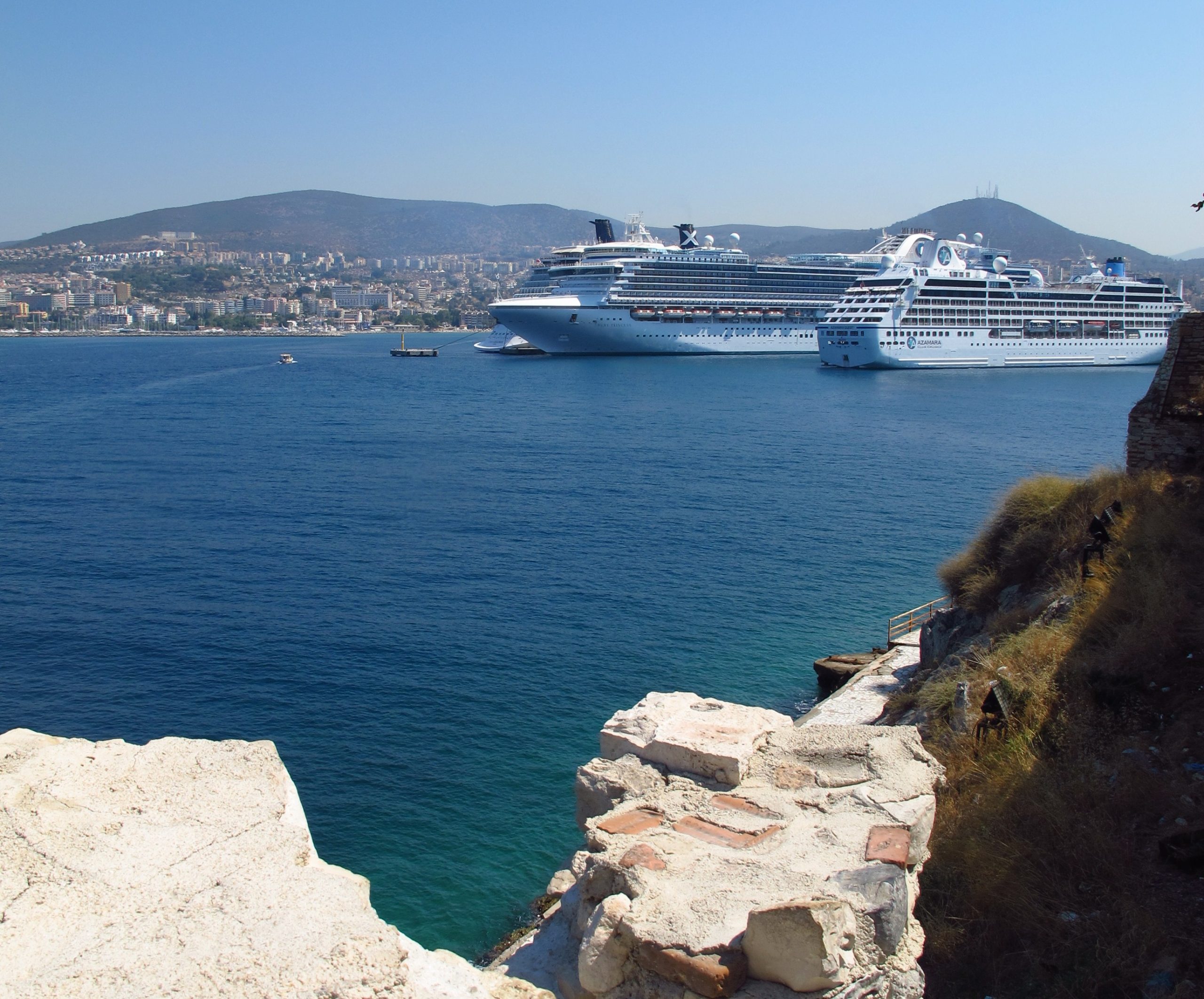
If you’re traveling to a smaller city along an ocean or sea (think Bergen, Christchurch, or Dubrovnik), do a quick check for any cruises that may be in port for that day, and what hours its guests may be ashore. Many cruise ships are pretty large and if over 3,000 tourists are dropped off on a smaller destination, they can snatch up tickets to popular attractions or make beaches, parks, and sidewalks annoyingly congested. Note the cruise ships on your Itinerary for when you schedule things later.
Spreadsheet: Excursions
Hopefully, you have found some amazing ideas for excursions to include in your trip. Create a new tab in your spreadsheet to figure out which ones and when to book them.
You may find several options for a tour to a specific place. Write down the most important info for you decide to reserve or not—what’s included in a tour, the price, the duration, the departure time, availability, or reviews. You can visualize timeslots throughout the day by what is offered, what is available, and what you are leaning toward. This can help plan your day when you're ready to move all of the attractions, excursions, events, and restaurant bookings into the Itinerary
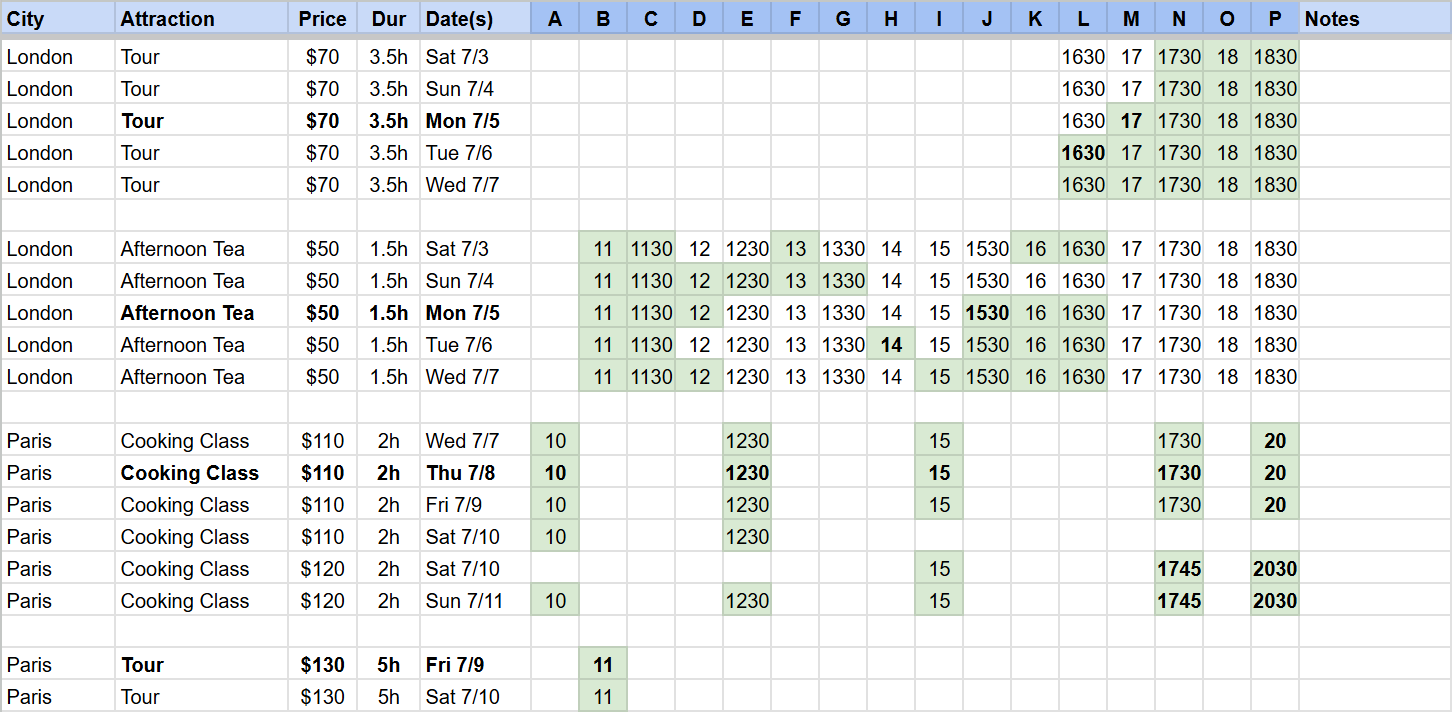
Research: Excursions/Tours
With your new Excursions tab, look up excursions, tours, and other operators that likely aren't in guide books. TripAdvisor (who also runs Viator) has a great list of tours to search by destination, filterable by type, and sorted by TripAdvisors’ combination of reviews and number of reviews.
Other places to search for tours:
- GetYourGuide is another reliable third-party aggregator of major tourist site operators
- Airbnb Experiences offers creative activities that are run by locals
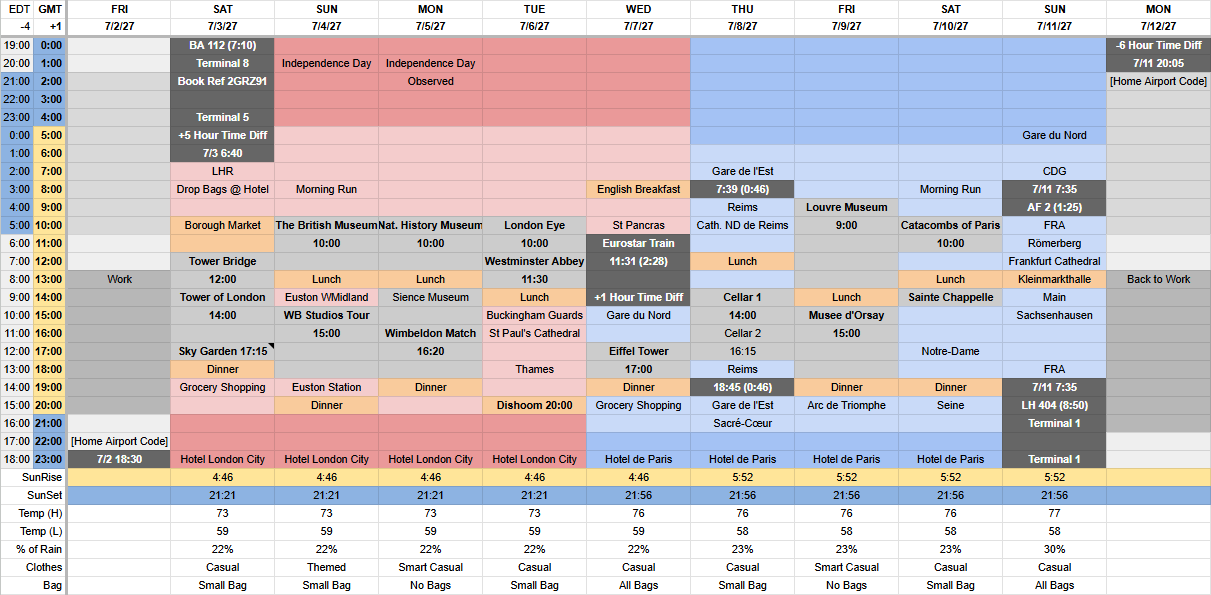
Move “Attractions" and Everything Else to "Itinerary"
With a more complete list of attractions, tours, restaurants, and activities to experience, start tentatively moving things over to your “Itinerary” tab.
Tips:
- Move excursions to the first things in a city. If a tour needs to be rescheduled because of weather, operator issues, etc., you are more likely to substitute for space later in your itinerary.
- Group items by day that don’t require significant travel time between them, i.e. 1 day for that day trip from the city, 1 day for the city center, 1 day for the attractions to the west and north of the city.
- If you already researched the dates and hours that a site was open, reference these frequently as you fill in spots like a jigsaw puzzle. Start with attractions high on your list with more restrictive hours or are closed for entire days.
- Fill in as many things as you can, but be conservative about how long an attraction may take and have backup plans if an event runs long, it’s closed for unseen reasons, or getting to an attraction takes longer than expected.
- Also be conservative in your time estimates so that you leave some spontaneity in your trip. If you underestimate your time in a museum, pass a neat shop, or choose to wander through a beautiful park, you won't feel pressured to continue to the next activity. Internationally, you will often have to ask for the bill to leave restaurants in a timely manner.
- Leave larger gaps and more flexible items for the last day you are in a city. If a tour or attraction needs to be rescheduled, you have a timeslot that is available.
- Remember to place meal breaks at appropriate times as well.
Spreadsheet: Accommodations
Now with a general idea of what areas of a city you’ll be in each day, find the perfect location within your budget. Consider hotels that are convenient to how you will arrive and depart a destination too. If you’re leaving from the same airport you flew in on, accommodation near public transportation to/from the airport will save time and stress, especially if you’ll be tired from a long flight.
If your stay is more than 4 days in a region, consider booking separate hotels and take advantage of the attractions near each hotel while you stay there, reducing travel time between activities.
Booking.com and Kayak.com have extensive options (hotels, apartments, villas, hostels) for most of the popular destinations, with room photos and room size measuments.
AirBnB and Vrbo are alternatives to hotels that often come with the amenities of an apartment like stoves, refrigerators, and washing machines. The drawbacks are that these stays don't offer the hotel concierge and bag drop-off, and can often be more expensive for short stays.
For trips over 7 days, you should consider booking a place that has a washing machine that is close to the midway point of the trip (or around the ⅓ and ⅔ intervals) so you can do laundry and save a lot of space in your luggage. Hotels also have laundry services as well if washing machines are not available.
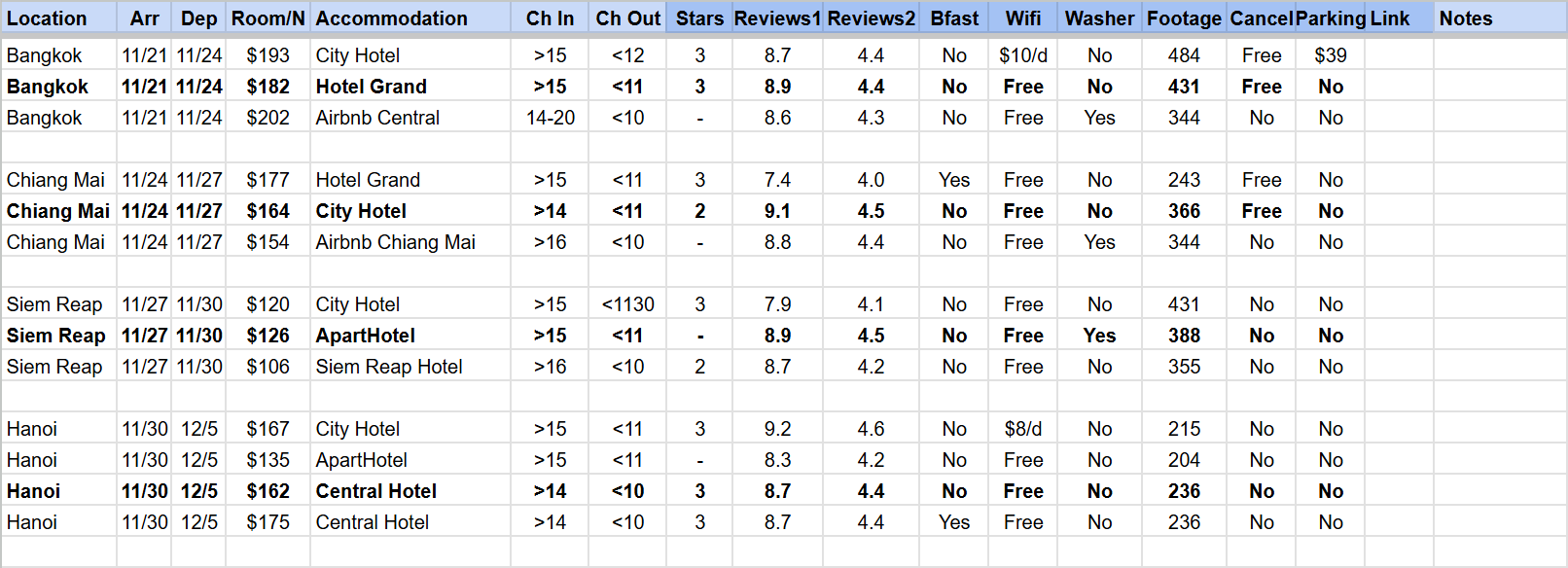
Research: Accommodations
Part of selecting accommodations is choosing a location that will be convenient for as many of the attractions that your travel group hopes to do.
View all of your itinerary locations on your trip map, against your accommodation options to visualize how you could leave your hotel, make your way to that first thing scheduled each morning, and return after a fulfilling day out.
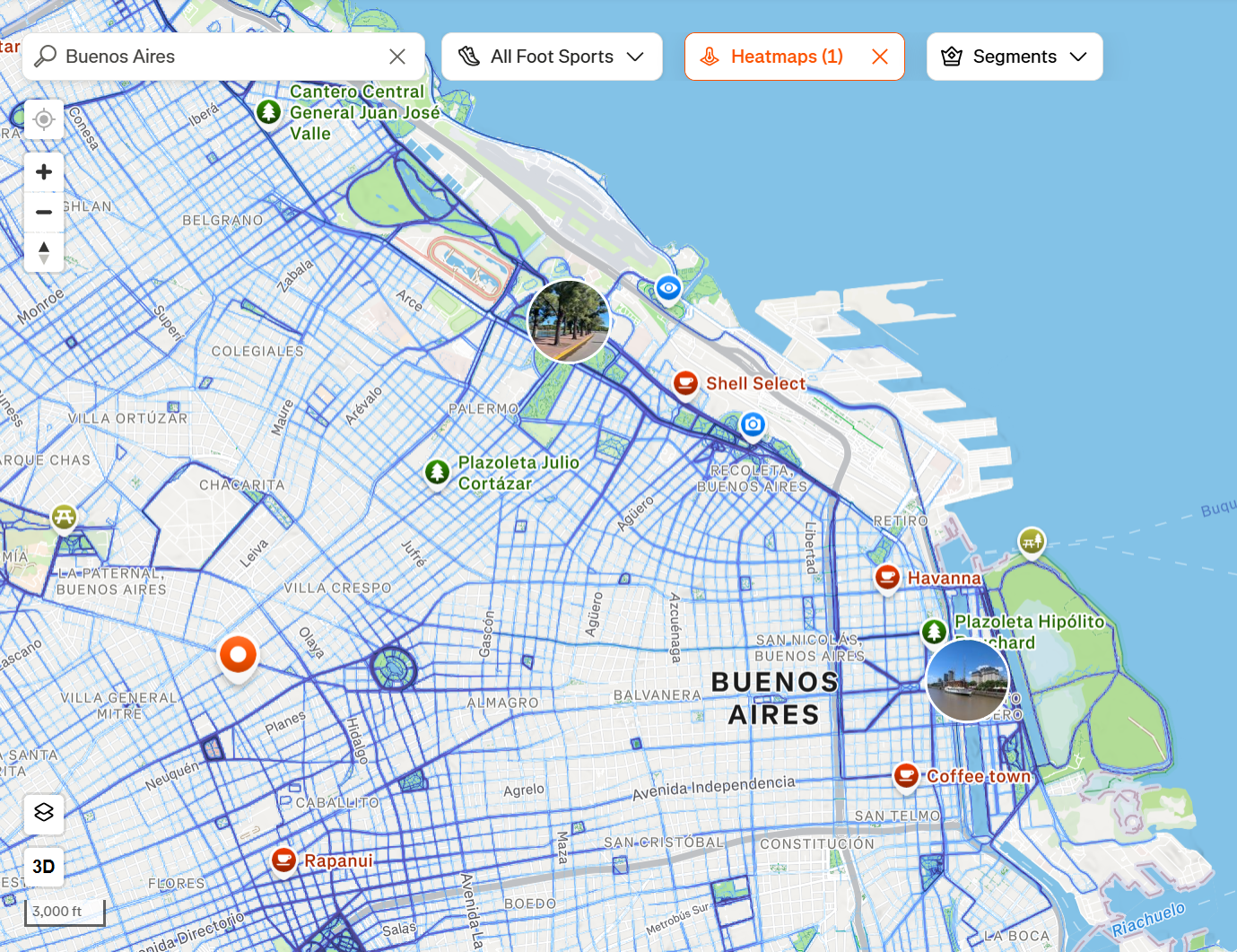
To better understand the neighborhood around a hotel, look up Strava heatmaps of users on foot (walking, running, hiking) or bicycle (road, mountain, e-bike) to discover which roads or trails locals prefer to get around their city. Paths with heavy usage are likely tourist-friendly and barren sections are likely residential with less interesting things to see.
Research: Restaurants
If you’re more of the foodie traveler, you’ve probably already looked at some great spots or a food tour through your research so far. If the restaurant is a priority, treat it like an attraction and schedule it around your other plans. For filling in other spots on the Itinerary, try searching for restaurants, cafes, or food trucks that are near your attractions or along your walking/driving routes between activities.
Pay close attention to business hours and have at least a couple ideas per meal. Pin them to your Map with a different icon or color. If you want the detail, you can even create separate icons or colors for “must try”, coffee shops, desserts, or specific for an allergen or cuisine type.
For searching, many of the same itinerary idea sites are great for restaurant picks—blogs, TripAdvisor, Reddit, and Google or Apple Maps for location-based recommendations.
Book: Transportation
With a solid itinerary of attractions, events, tours, restaurants, and accommodations all mapped out, now you can begin to make the plan a reality.
Book the trains, buses, ferries, and any shorter flights that connect your dots.
If transportation you had scheduled is no longer available at that time or significantly more expensive, feel free to revamp the Itinerary as needed. Book an earlier train and then cut out that last attraction in the new city.
Book: Accommodations
With all of your major transportation connections in place, you can now book your hotels, hostels, BnB’s, etc. Like transportation, if the place you had in mind is no longer available or significantly more expensive, hopefully you can go with your second or third option from your research.
If any of your excursions are overnight, you can book those now also.

Book: Excursions/Tours
The larger pieces of your Itinerary can now be finalized. The two-hour to all-day excursions can be booked.
If the excursion is one where they pick you up from your hotel, you can now provide that information while booking.
Book: Car Rental
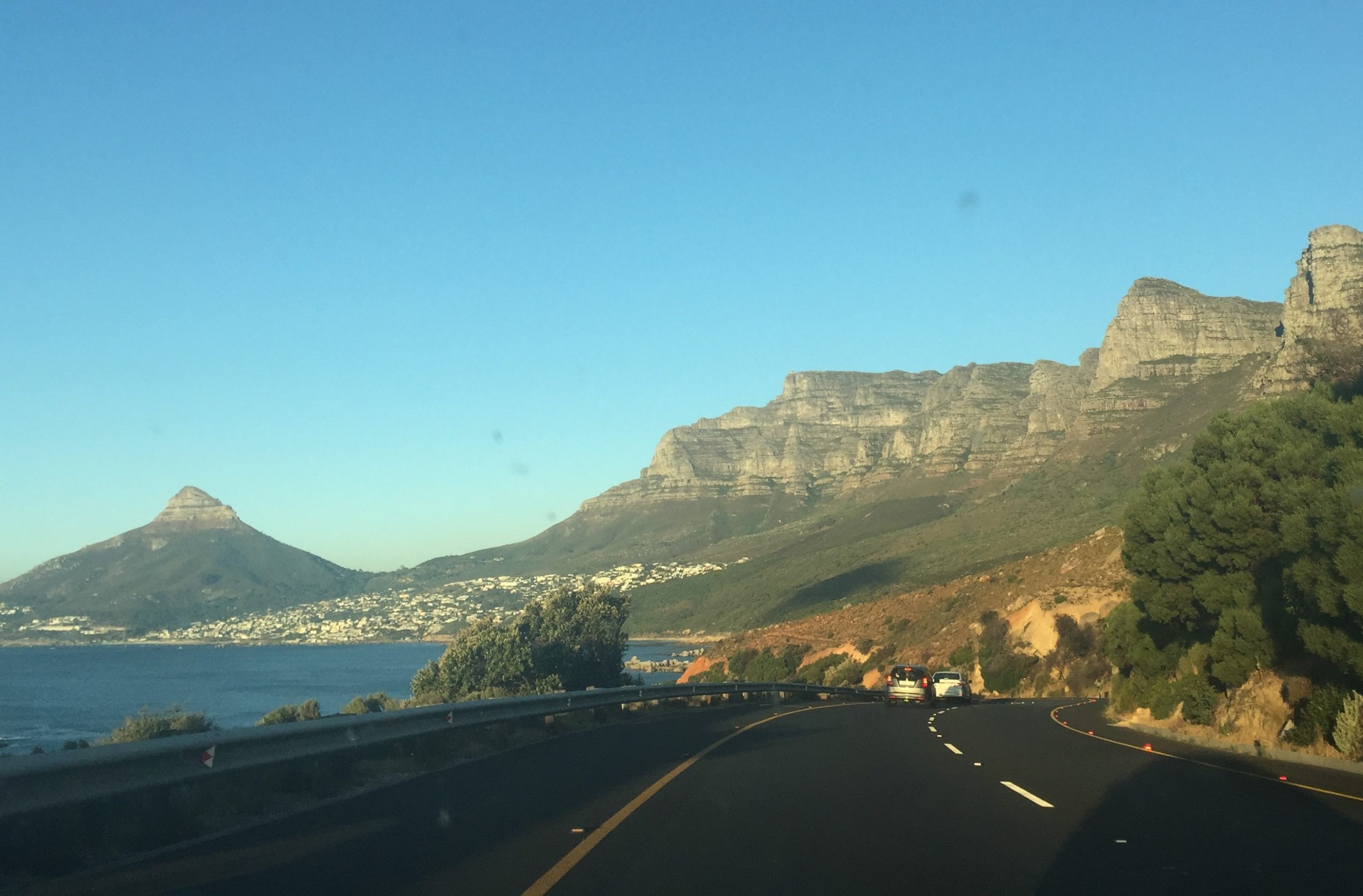
If your trip includes attractions that are not accessible by public transportation, renting a car may be the most practical means of getting there. Hopefully, availability and cost hasn’t changed too much since your initial check.
Many countries have lower availability for automatic transmission vehicles, so make sure you are comfortable being able to drive what you reserve. Most former British colonies also drive on the left side of the road, so there is a learning curve for switching sides.
Book: Ticketed Attractions
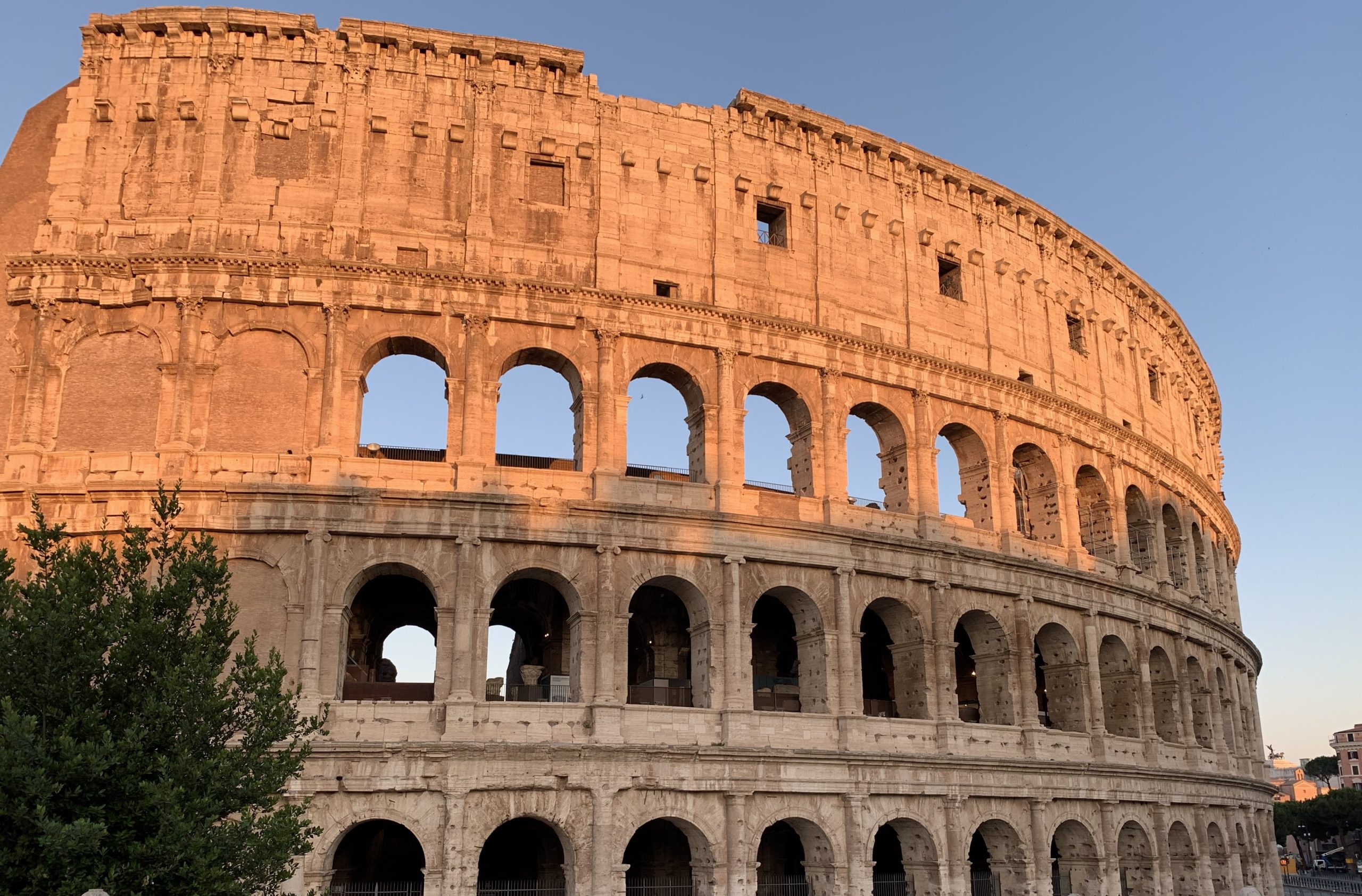
Many attractions get quite busy and it’s recommended that you book in advance.
Pre-booking tickets for museums, shows, archaelogical sites, etc., helps to avoid lines when you arrive, often has lower online costs than at the ticket booth, and avoids the possibility of being sold out.
The tradeoff is that it gives your schedule less flexibility if you need to move things around. If you’re unsure whether to book in advance, try to check availability for the time that you are there. If certain hours or timeslots start disappearing, book what you need.
Occasionally, there can be credit card issues while booking international tickets, so you may have to work with your card issuer or the attraction's customer support for a solution.
Book: Restaurants
It’s good to have flexibility around when you have meals and most restaurants won’t require a reservation. If offered, you can check the online reservation system of the restaurant for the current day and the same day of the week you hope to eat there, and see the availability. You can make a reservation just in case and cancel or modify it during your trip. Use your best judgement about which places will be too busy to walk into.
Google also has “popular times” graphs for restaurant and businesses to help with this estimate.