The Destination
.The first step of any trip is deciding where and when to go. The destination can be a lifelong dream or a spontaneous travel deal.
Either way, you’ll want to maximize your time enjoying the adventure you’ll soon plan.

Inspiration
What inspires you to travel? Is there a culture, a cuisine, an activity or event, or a natural wonder that you hope to see? Maybe a destination for all of these?
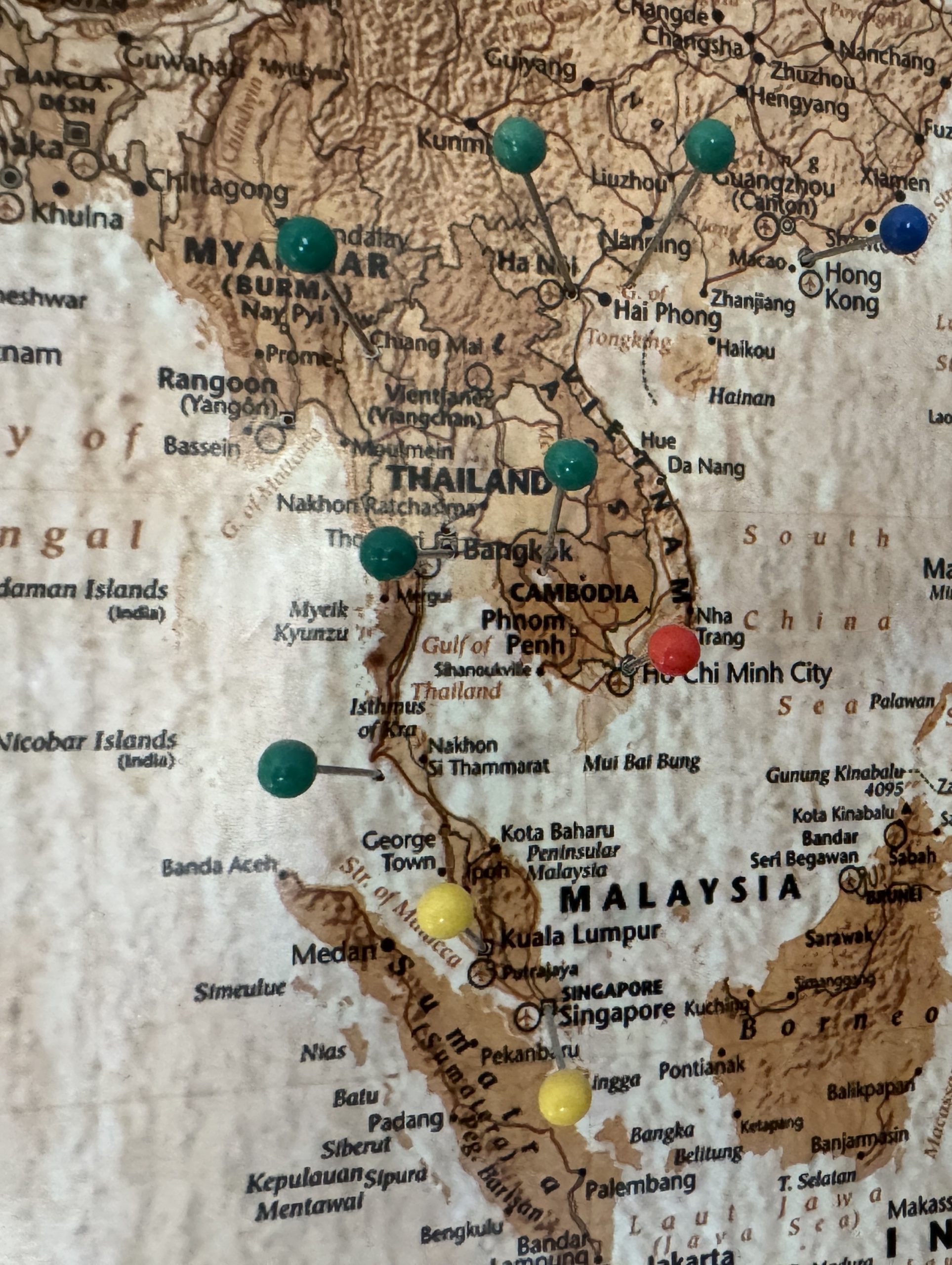
Whether it’s a far-off dream, on the bucket list, or the next expected trip, start pinning destinations on a map (either physical or digital) to organize the locations you hope to see.
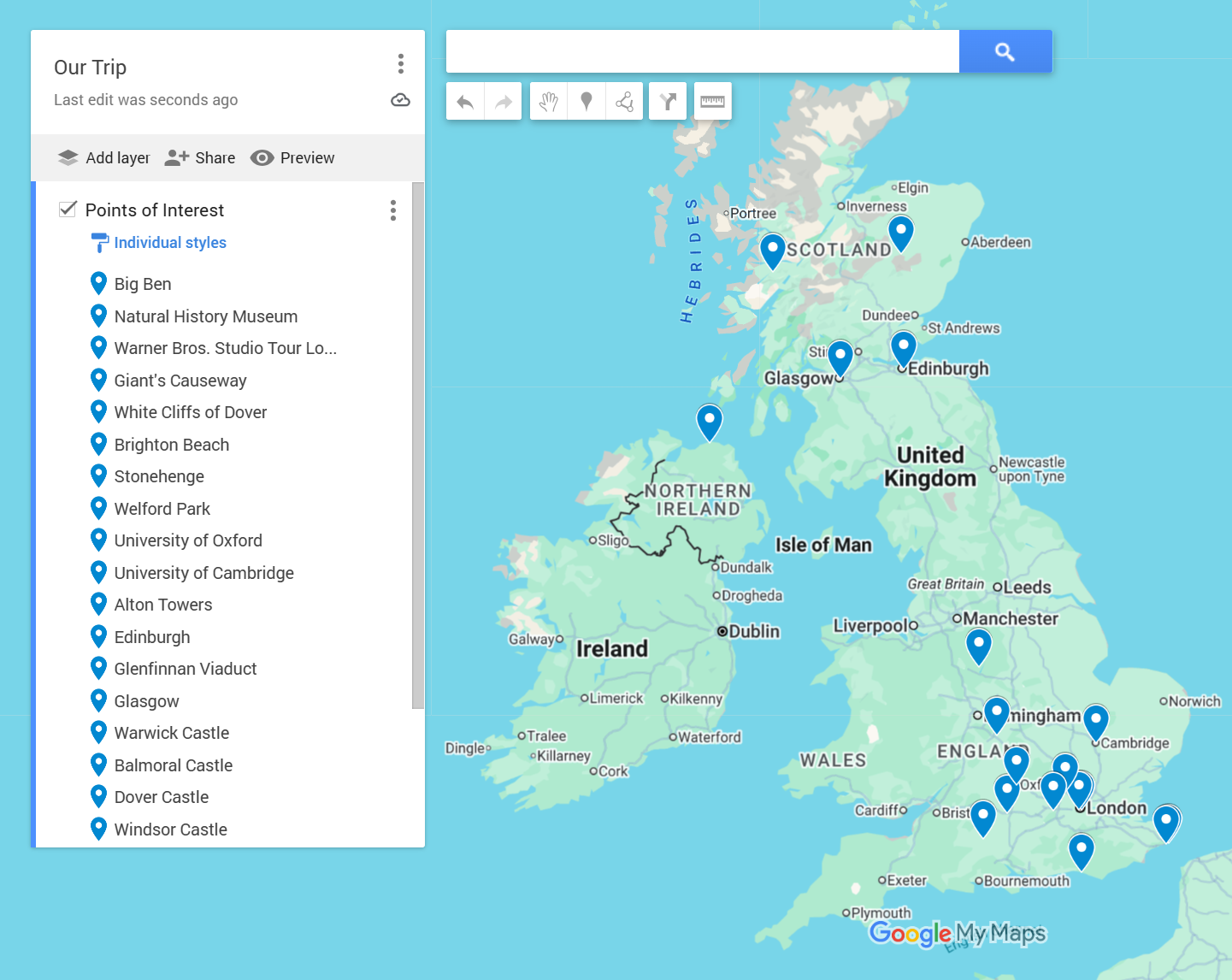
Google My Maps: A digital map of pins with different colors, icons, and routes that can be saved on a desktop and loaded on the Google Maps app.
Pinterest: Create an account and "pin" destinations to your digital wall.
Corkboard: A physical display for places, photos, articles, and ideas that can be hung on a wall for inspiration, motivation, or even just a talking point.
Schedule
Many workplaces start out at only 10 days of paid vacation time per year, allowing for only one 2-week or two 1-week trips. How can you push that further? First, check your work’s holiday calendar.
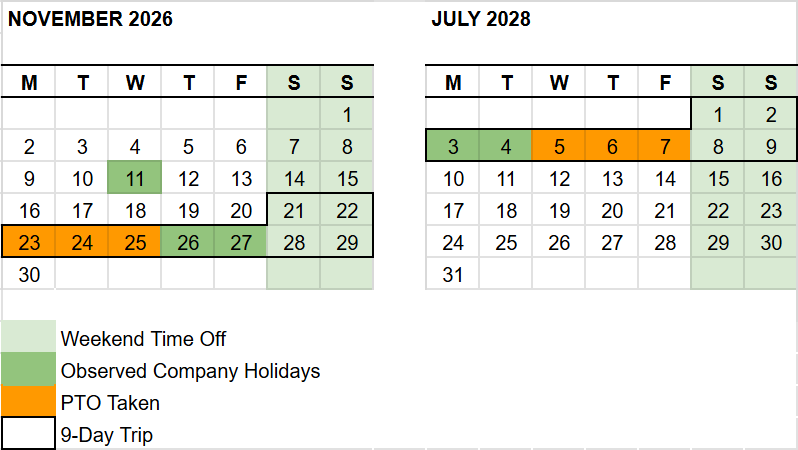
Many companies have Thanksgiving Day off plus the day after, so including the whole week in your trip allows for a 9-day itinerary while only taking 3 days off. This is a great time for traveling to warmer destinations in Asia or Latin America, or the Southern Hemisphere, where it is their spring.
A similar effect is seen for Independence Day or Christmas / New Years. Depending on the days these holidays fall, you could have July 3rd or Boxing Day (December 26) off if it’s adjacent to the weekend. These times are typically the busiest internationally, so if you choose these times, book as early as you can.
A kayak.com article expands this idea on how to turn 11 days of PTO into 31 using long weekends.
Timing
With your trip inspirations pinned and PTO schedule outlined, when do you hope to go?
Some events like festivals, sports, or concerts are fixed, but for other destinations, there are ideal and poor times to visit.
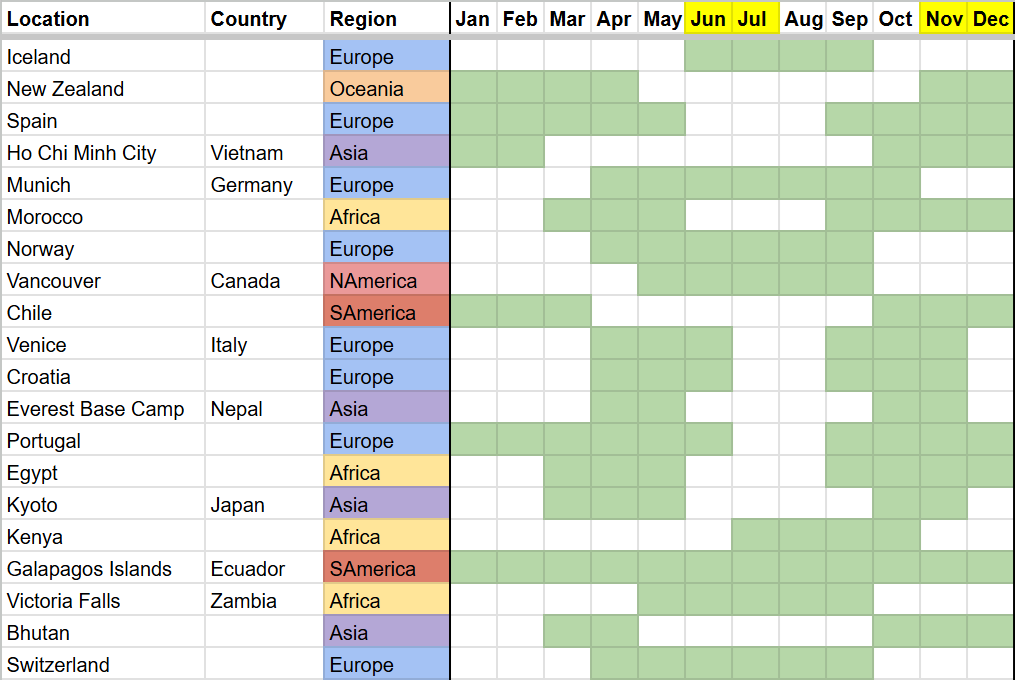
Create a chart with your destinations (not too granular) and when you could potentially travel there.
Use Weatherspark.com to get a really clear idea about the weather and celestial data (Temperature, Chance of Precipitation / Clearer Skies, Ocean Temperature, Daylight, Moon Phases)
Award Travel
For those who fly often or pay off moderate credit card balances each month, there is a whole world of travel reward miles or points to earn and use on hotels and flights, including first/business class. The Points Guy is a great site for learning and strategizing how to earn and use miles.
If you have a significant number of miles or points, check the availability of flights to your destination before looking at flight prices. It varies by airline, but booking a flight with rewards or a credit card generally becomes available 11 months prior to the flight.

Travel Deals
Many travel sites strive to find you good deals on flights and vacation packages, if your budget is more restrictive than your schedule. Their tools will scan for flights that are lower than usual for that time of year. Or these sites can offer packages in bulk by working with the airline, hotel, and tour operators.
- Travelzoo: Travel deals on flights, hotels, vacation packages, and entertainment.
- Going: Receive emails alerts when flights prices drop heavily to any of 900 destinations
- Kayak: Track prices to your desired flight destination
- Google Flights: Receive alerts when prices drop for specific routes
Visa Requirements
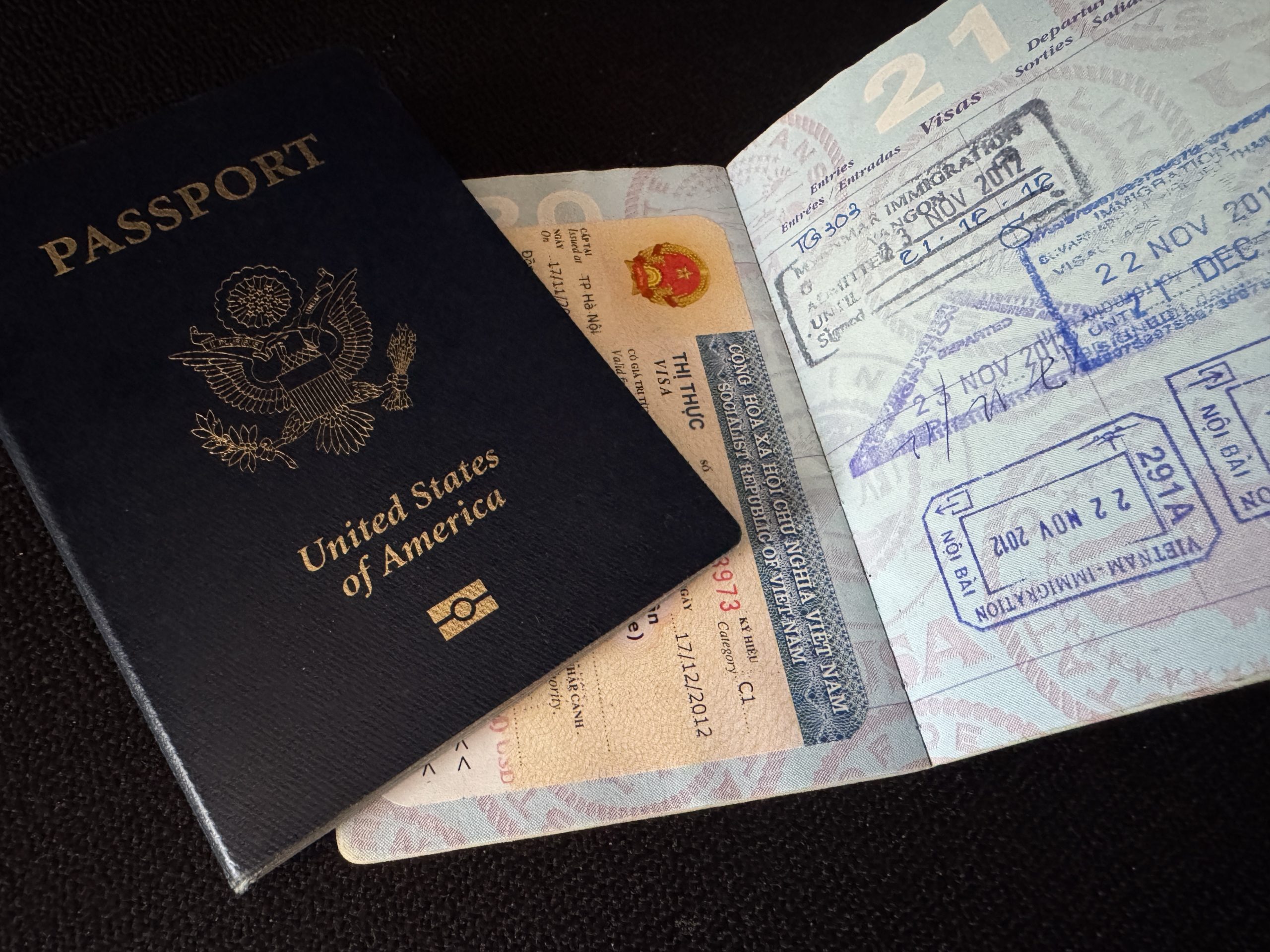
Hopefully everyone in your travel group already has a valid passport, but if not, the U.S. State Department outlines the steps to renew or Apply for a U.S. Passport.
A US passport allows visa-free or visa-on-arrival access to 180 countries, but check with the State Department for requirements for traveling to any of your potential destinations.
Check: Accommodations
You may be in a city specifically for an event, but that also means so could half the population of a small town. Before committing to any events or transportation to a location, check that there are accommodations available and in you budget.
It’s not as big of an issue for major cities, but check that some unforeseen event in a small or medium-sized city doesn’t fill up all the hotels.

Map: Points of Interest
You’ve probably found dozens of interesting destinations while in the early stages of your trip planning. But you need a way to organize them.
Create a dedicated map for your trip that places pins at Points of Interest. These pins can be used later to optimize how to get around, how to navigate a city, and how to search for hotels, restaurants, and additional attractions.
Spreadsheet: Itinerary
The single biggest tool for organizing your trip is a visualization of your entire schedule. Mapping out what you are doing and when you are doing it, is vital to scheduling as many amazing things as possible.
Microsoft Excel and Google Sheets are the most accessible, though the latter is a little easier to share and view offline, for you and all your travel companions.
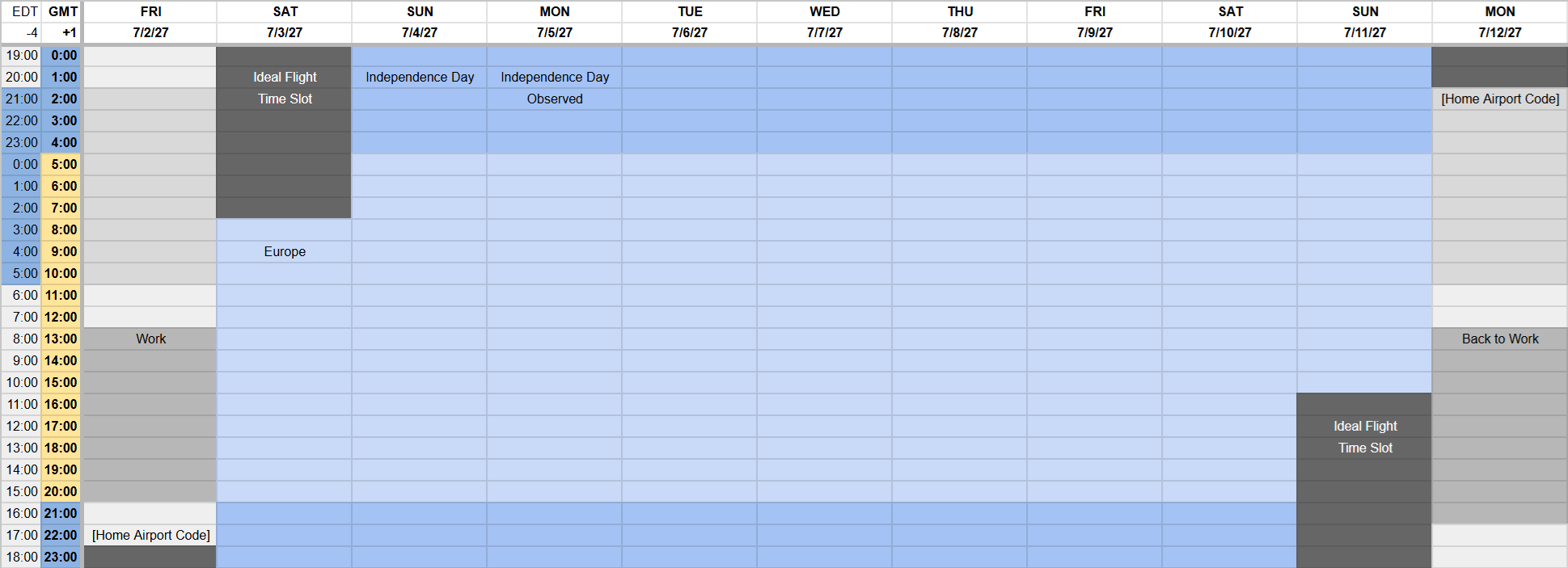
- Create a large table with the days of your trip, down to the hour (or half hour if desired)
- Add time zone adjustments with side-by-side hours for your origin time zone and destination time zone(s)
- As you figure out your itinerary, block out time for Flights, Trains/Buses, Excursions, Events, Tours, Restaurant Bookings
- Use colors for different regions and day/night time to help visualize your days